Problem
Users need to improve how they monitor and react to merchandise alerts data within one tool. Tedious and manual alternatives became the standard process as users outgrew the existing software’s original functionality.
Research revealed that users were spending an average of 3 hours per day managing and sharing their product data with excel and powerpoint as their primary tools.
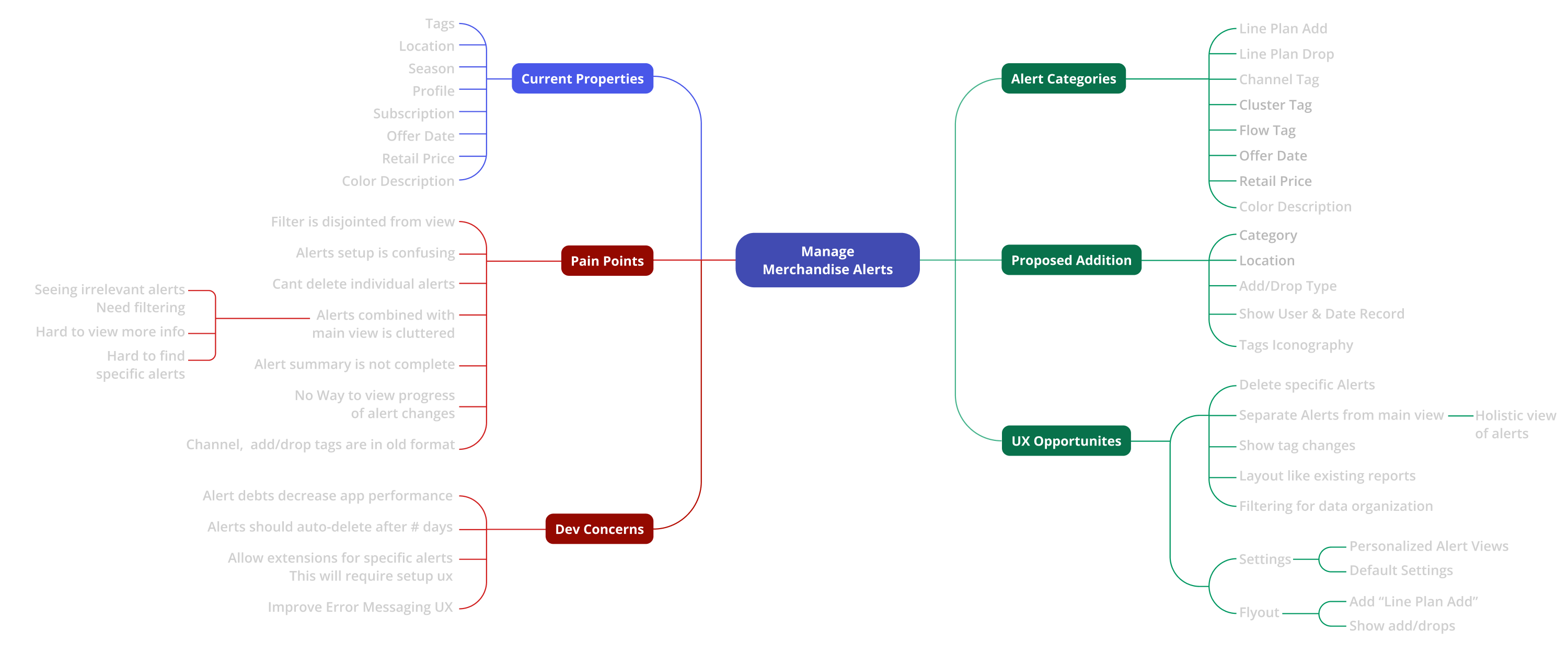
A mind map was made to visualize user interview data and myriad feature requests. The map helped the team prioritize and scope the level of effort for our design strategy. We were able to quickly understand what the concerns were, engage in discussion, and analyze for engineering feasibility based on the non linear insights of the mind map.
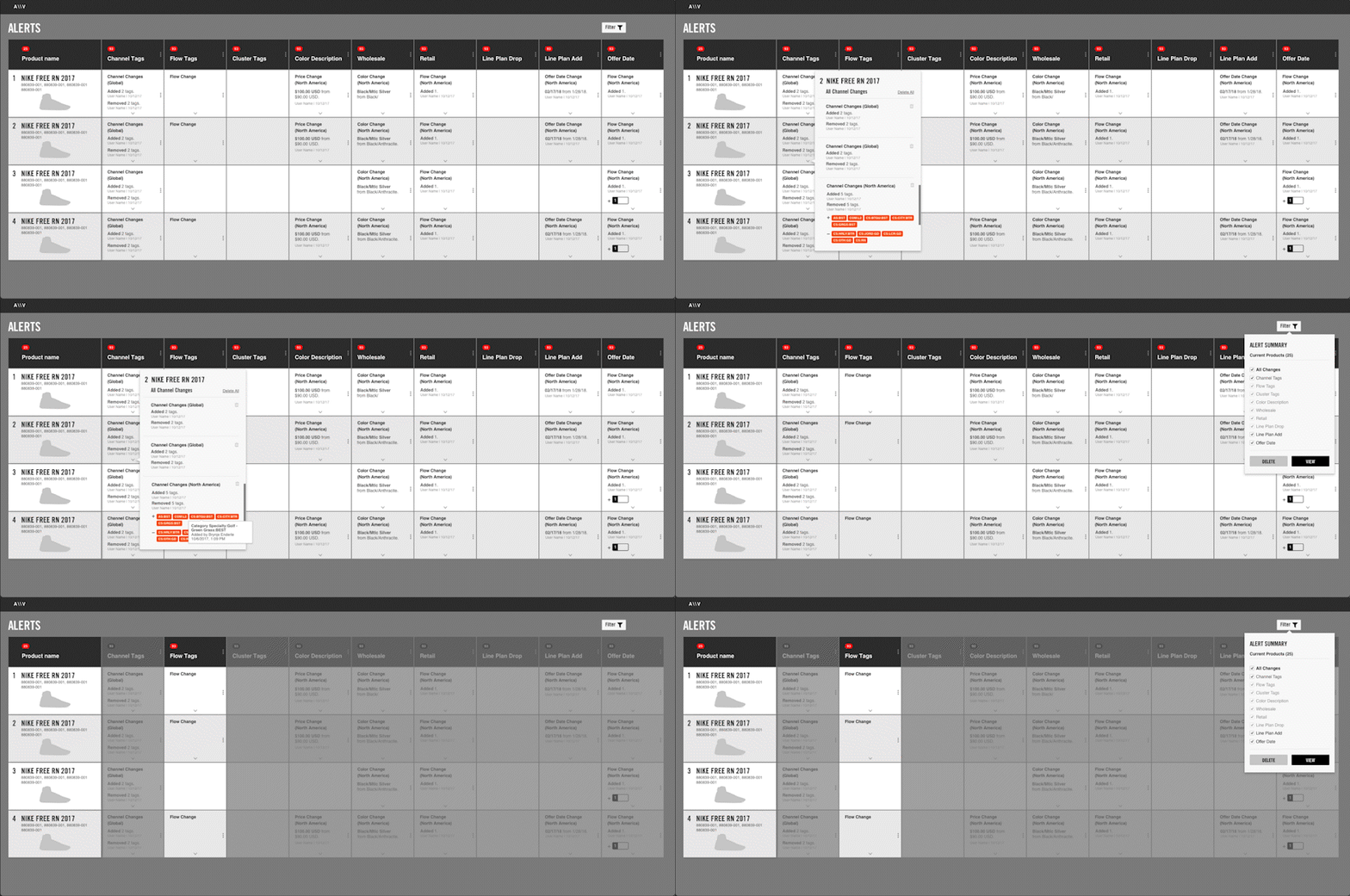
Low-fidelity prototypes were used to validate usability and test new concepts, revealing that too many interaction patterns increased cognitive load. Insights guided simplification of filtering and data organization.
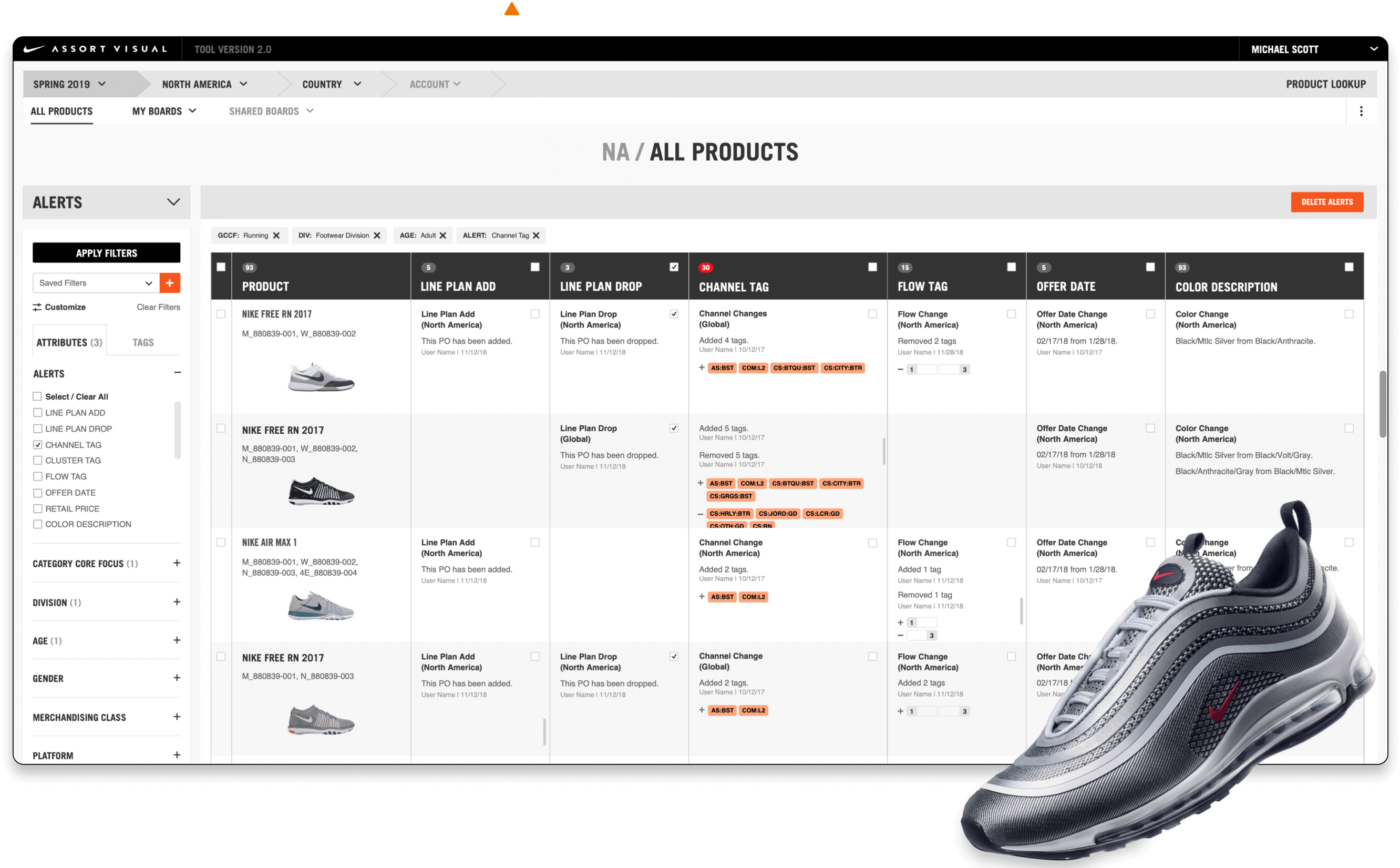
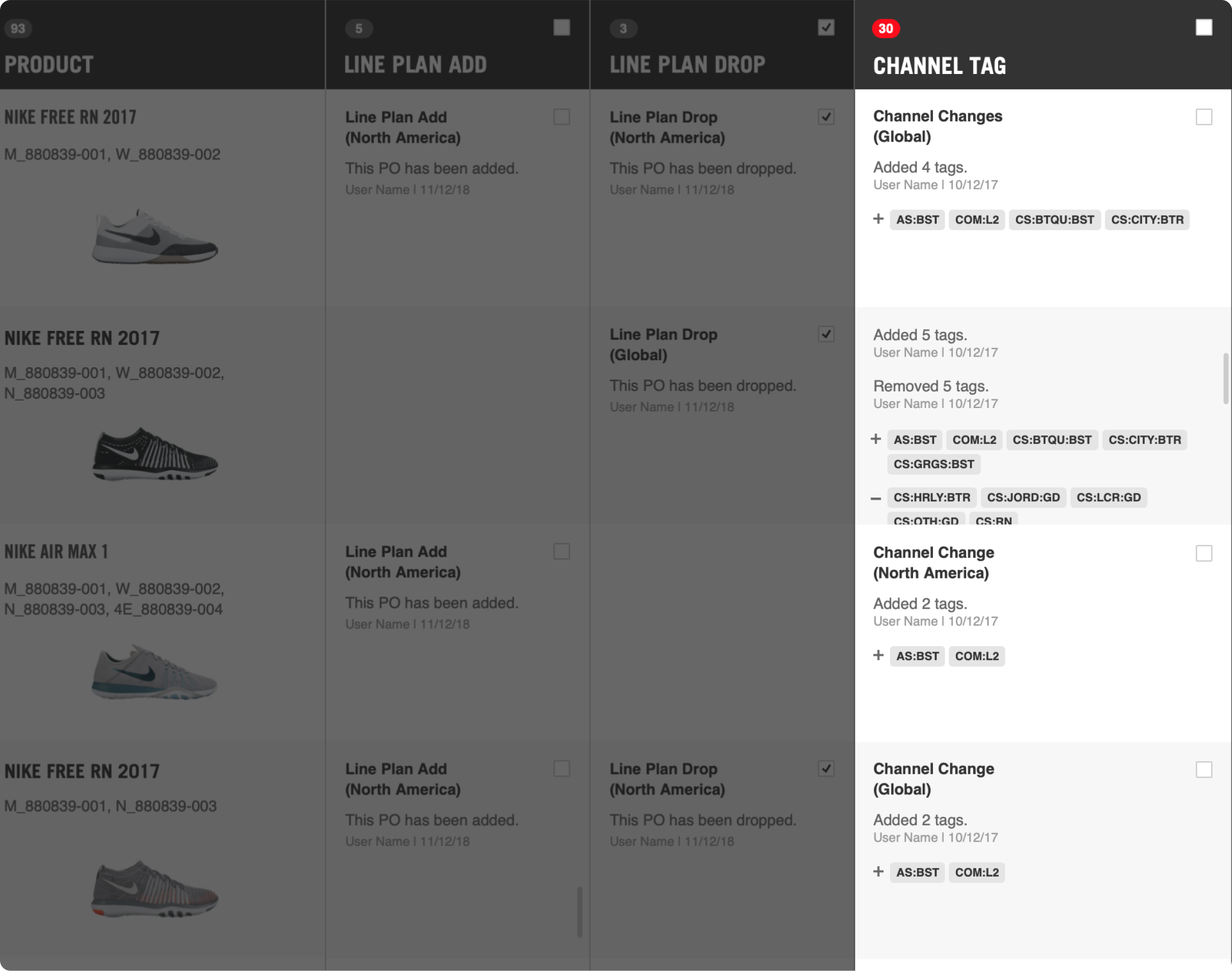
A document-style grid delivers a comprehensive, customizable view of merchandise data, enabling efficient scanning and power-user workflows. Modular, scrollable layouts automate manual tasks and streamline report creation.
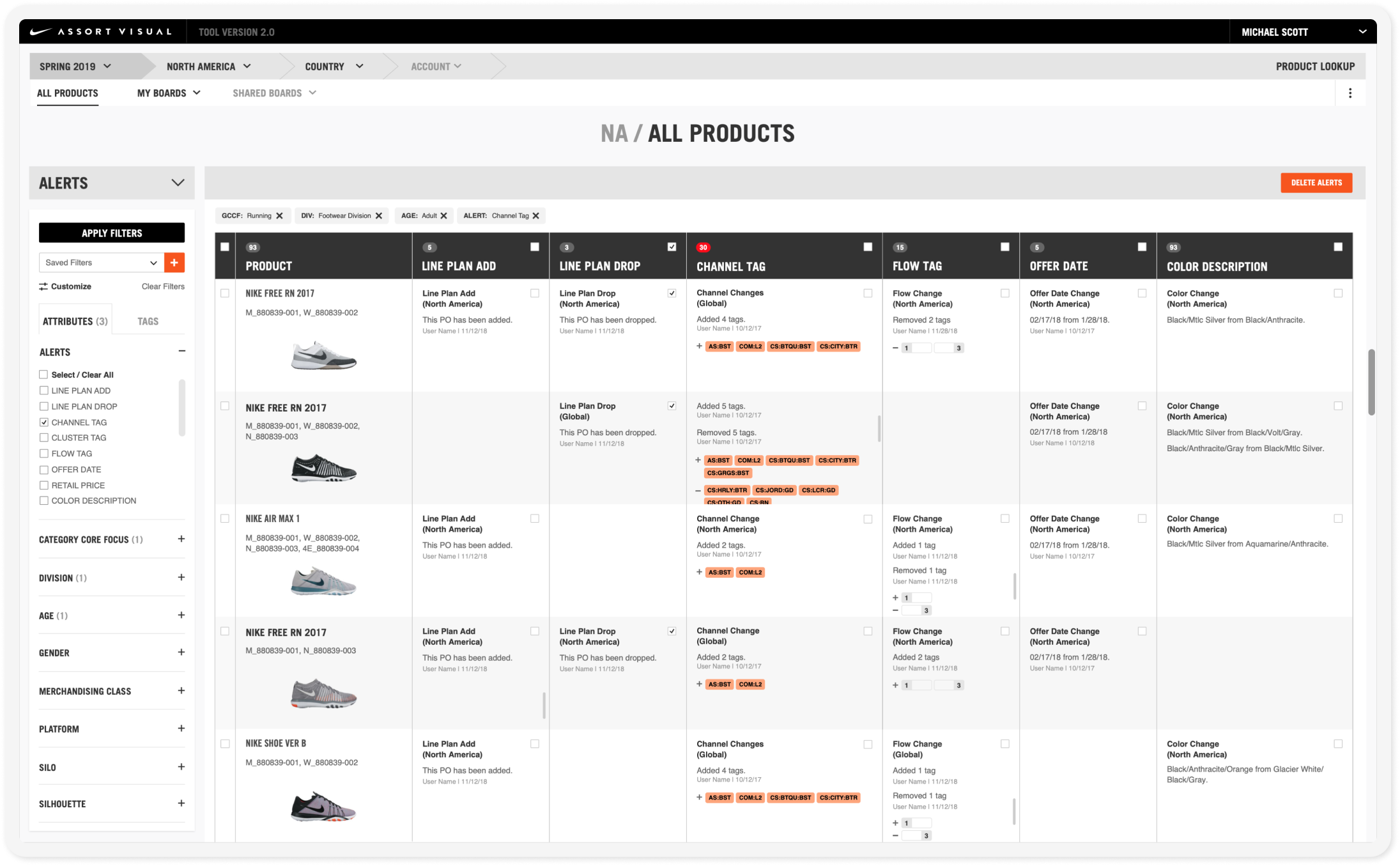
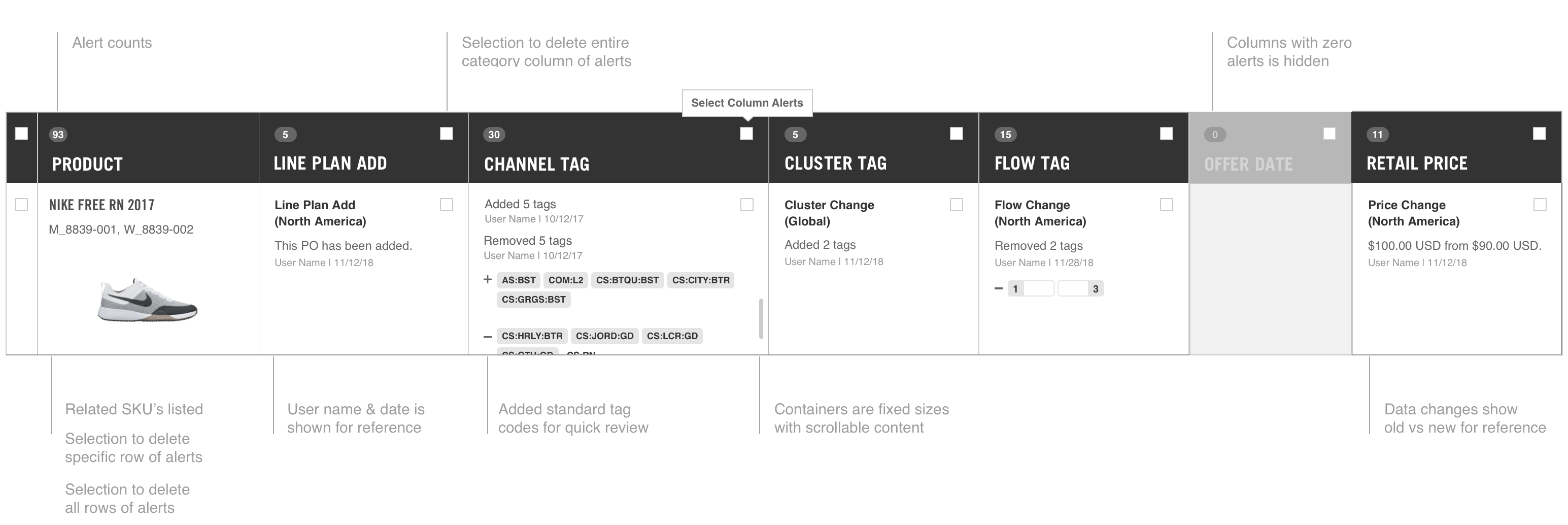
The merchandise grid enables fast scanning through filters and personalized views, blending familiar document layouts with advanced data displays. Research identified alert management and editing opportunities, informing feature enhancements that empowered users.
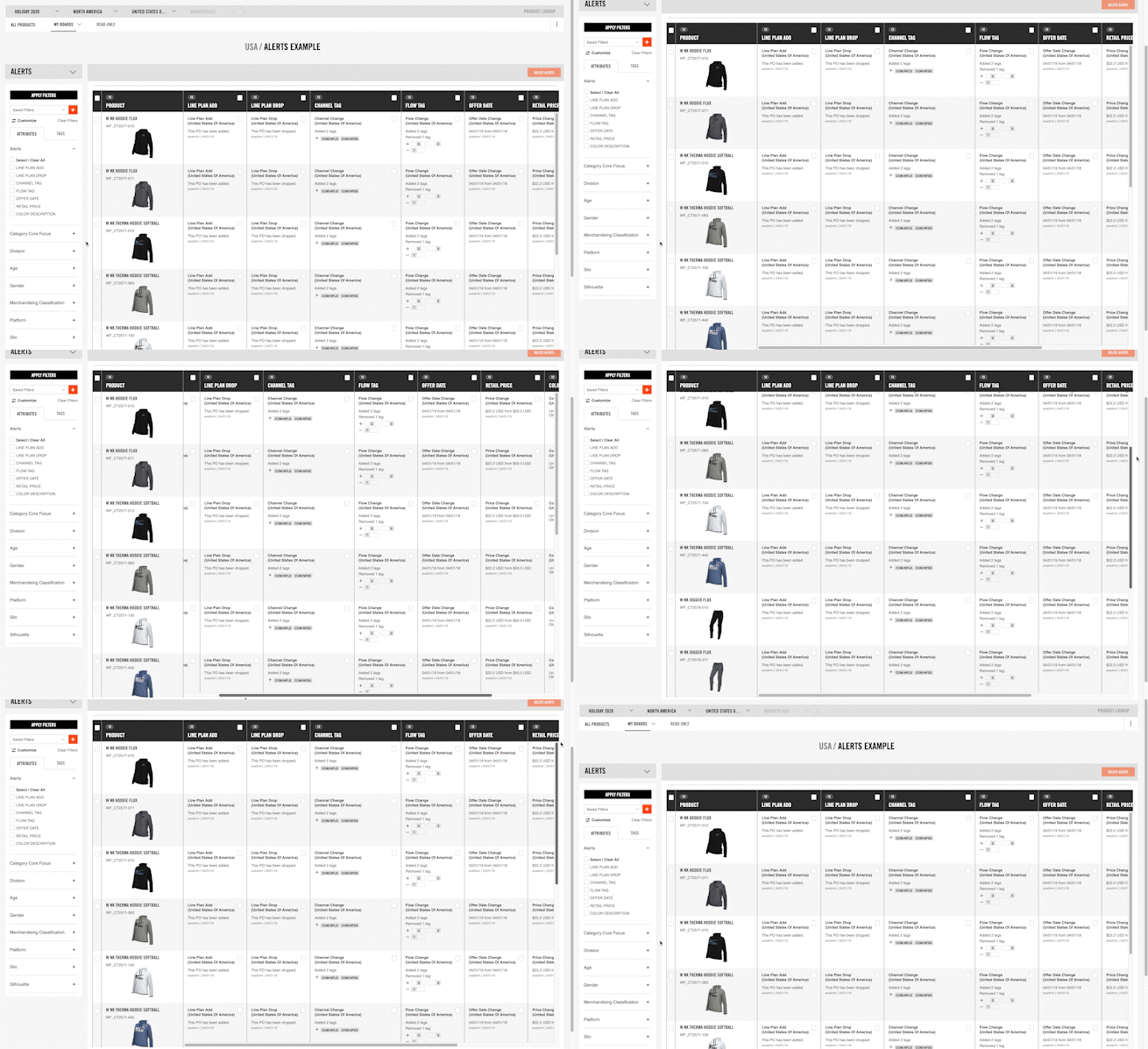
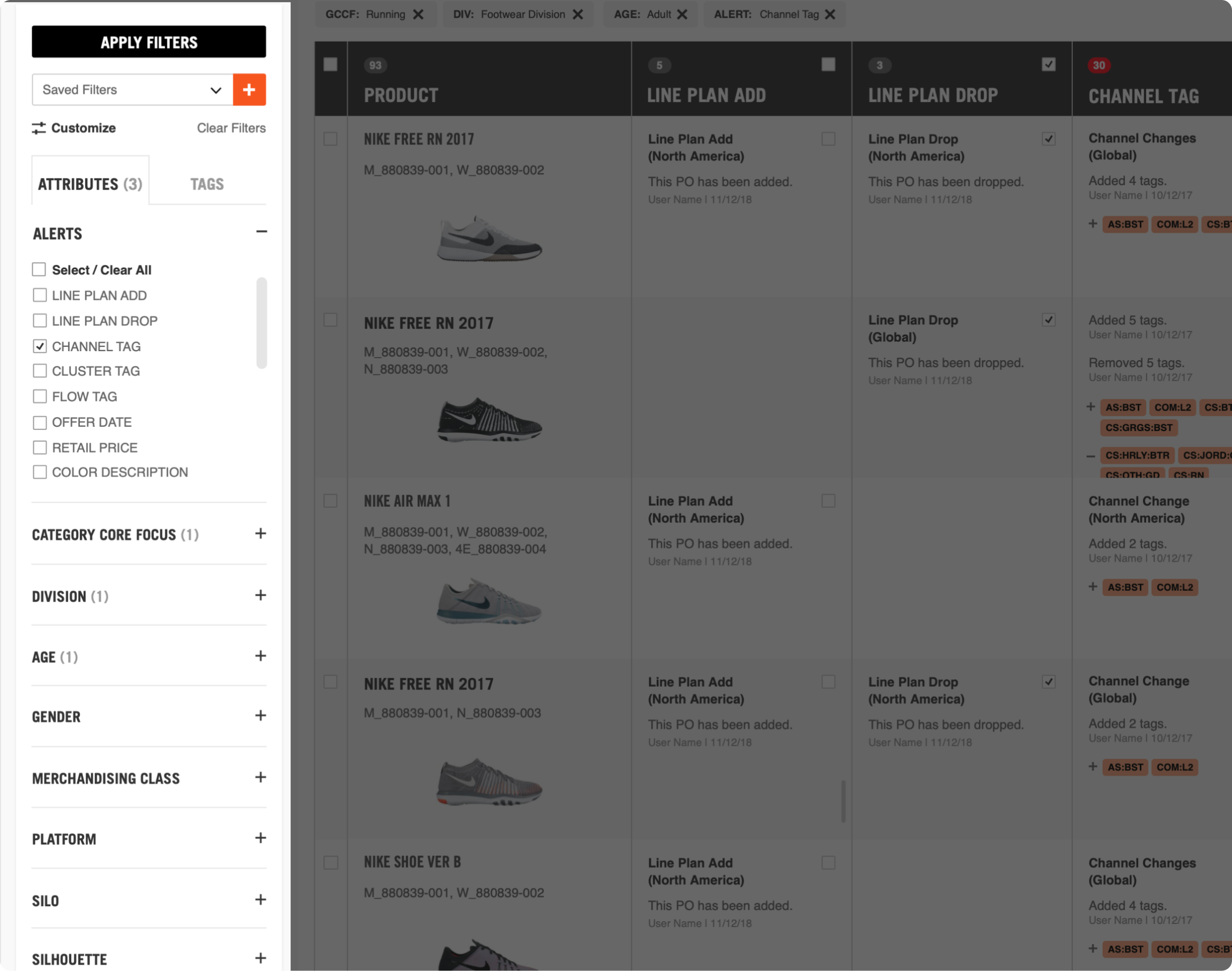
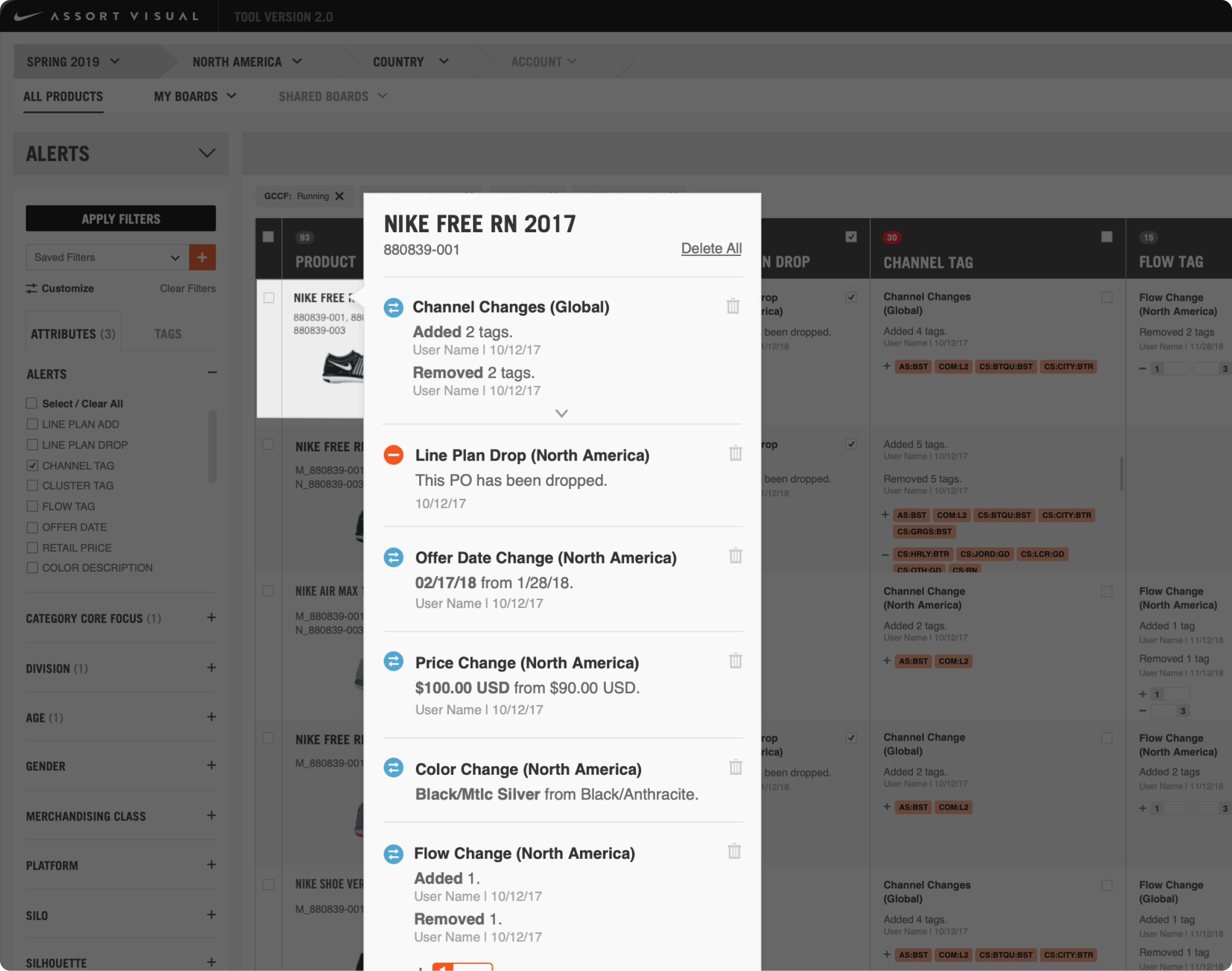
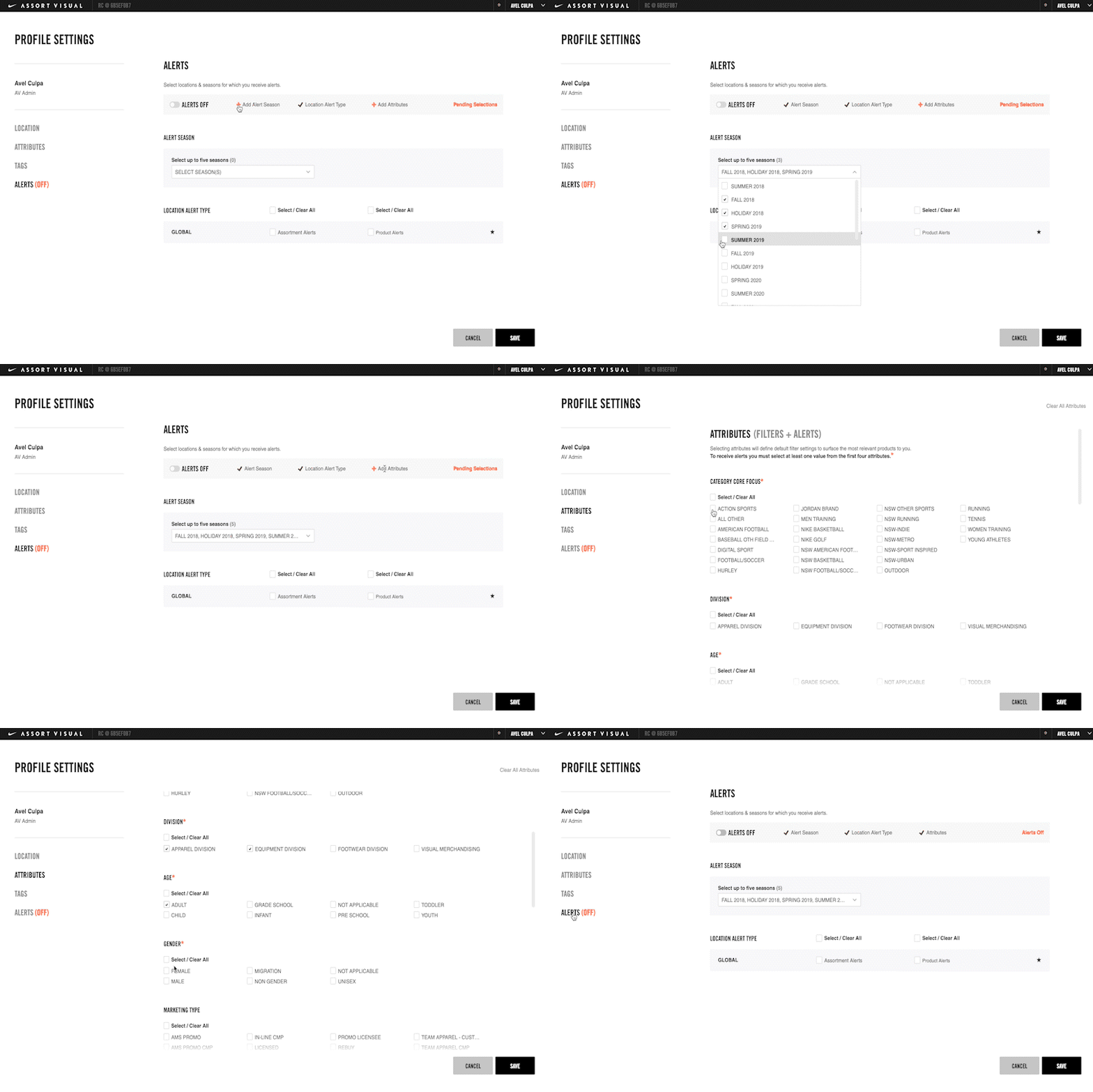
Profile settings enable multiple default grid views. Usability testing showed users need different filter combinations per report, so saved settings reduce manual setup and speed alert analysis.
Learnings
While prototype tests offer initial feedback, they don't fully capture user satisfaction. By leveraging analytics, we gained insights into actual user behavior, which helped us assess the long-term viability of the features in real-time.
Despite a successful adoption rate, some users continued to rely on their original methods to complete their tasks. This slower adaptation was expected, and to address it, I, along with team leaders, facilitated documentation and open training sessions to boost user engagement.